
Updated November 2026
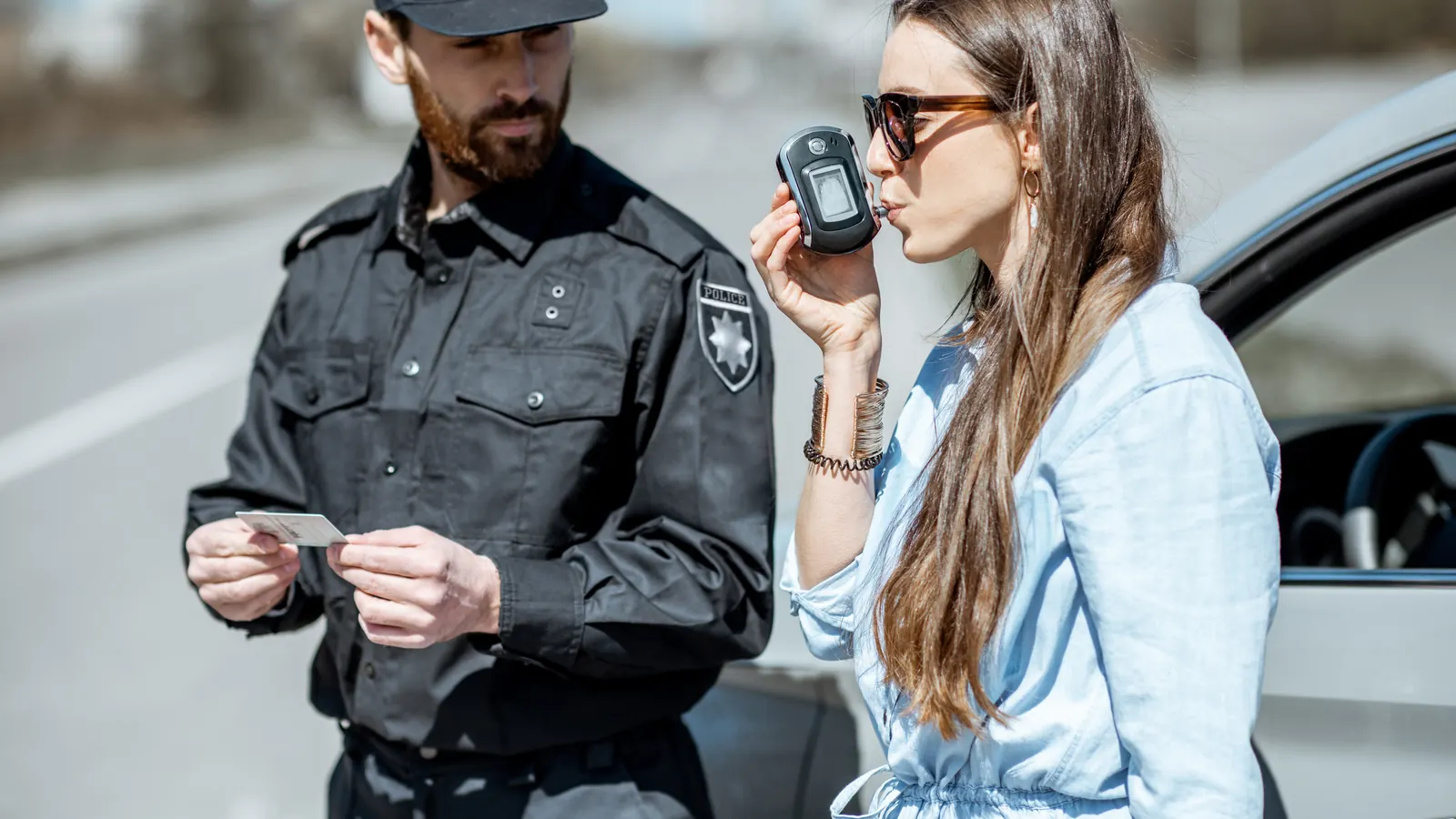
If you refuse a breathalyzer or blood test after a DUI arrest in Pennsylvania, PennDOT will suspend your driver’s license for 12 months for a first refusal, or 18 months if you have a prior refusal or a prior DUI. That suspension is separate from the DUI case itself. The refusal can be used as evidence against you, and refusing a breath test (or a blood test the police had a warrant for) means you face the highest tier of DUI penalties if you are convicted. A refusal suspension can be appealed, but the deadline is 30 days.
What Pennsylvania’s implied consent law says
Pennsylvania’s implied consent law, 75 Pa.C.S. § 1547, says that anyone who drives in the state is considered to have agreed to chemical testing of their breath, blood or urine if a police officer has reasonable grounds to believe they were driving under the influence. Before a refusal counts, the officer must warn you that refusing will lead to a license suspension. In practice that warning is read from PennDOT’s DL-26 form.
Implied consent applies after an arrest. The roadside preliminary breath test and field sobriety tests (walk-and-turn, one-leg stand, eye tracking) are different. They help the officer decide whether to arrest you, and they are not the chemical test that § 1547 is about.
What counts as a refusal?
A refusal does not have to be the word “no.” Pennsylvania courts treat anything short of a clear, unqualified yes as a refusal. That can include:
- Saying you will only test after you talk to a lawyer. You have no right to speak with an attorney before a chemical test, and asking to can be treated as refusing.
- Not providing enough breath for the breathalyzer to get a valid reading.
- Staying silent, stalling, or agreeing and then backing out.
On the other hand, real confusion, a language barrier, an incomplete warning, or a medical condition that made testing impossible can all mean there was no legal refusal at all.
How long is the license suspension for refusing?
- First refusal: 12-month suspension of your driving privileges.
- Prior refusal or prior DUI: 18-month suspension.
This is a civil penalty imposed by PennDOT, not by the court, and it applies whether or not you are later convicted of DUI. If you are convicted, the DUI suspension is added on top of the refusal suspension rather than running at the same time. To get your license back after a refusal suspension you will generally need an ignition interlock device. Pennsylvania’s Act 36 of 2026 is changing when drivers can apply for an ignition interlock license during a suspension, so check current eligibility before you assume you have to sit out the whole term.
Breath test vs. blood test refusals
The license suspension is the same for both. The criminal consequences are not.
Under 75 Pa.C.S. § 3804(c), if you refused a breath test and are convicted of DUI, you are sentenced in the highest tier, the same as a driver with a blood alcohol concentration of 0.16% or more. For a first offense that means at least 72 consecutive hours in jail and a fine of $1,000 to $5,000.
Blood is different. In Birchfield v. North Dakota (2016), the U.S. Supreme Court held that states cannot criminally punish a driver for refusing a warrantless blood test. Pennsylvania changed its law in 2017 so that the enhanced penalties apply to a blood refusal only when the police had a valid search warrant. PennDOT can still suspend your license for any refusal, and police can still get a warrant and draw blood.
Which test you were asked to take, whether there was a warrant, and exactly what you were told all matter. They are the first things I look at in any refusal case.
The refusal can be used against you
Under § 1547, the prosecution can tell the judge or jury that you refused testing and argue that you refused because you knew you were impaired. Refusing does not stop a DUI case either. Officers often build the case on driving behavior, field sobriety tests, statements and dashcam or bodycam video instead. There are often good answers to the refusal argument, such as confusion, a medical issue or an unclear warning, but it has to be addressed head-on.
Can you appeal a refusal suspension?
Yes. A refusal suspension can be appealed to the Erie County Court of Common Pleas. The appeal must be filed within 30 days of the date PennDOT mailed the suspension notice, so do not wait for the criminal case to play out first. In most cases a timely appeal puts the suspension on hold until the hearing.
At the hearing, PennDOT has to show that:
- You were arrested for DUI by an officer with reasonable grounds to believe you were driving under the influence.
- You were asked to submit to a chemical test.
- You refused.
- You were properly warned that refusing would lead to a suspension.
If any of those pieces is missing, for example the warning was incomplete or what the officer called a refusal was really confusion, the suspension can be thrown out. If you claim a medical condition prevented you from testing, you will usually need a doctor’s testimony to prove it.
Is it better to refuse or take the test?
There is no single right answer, and every stop is different. What I can explain is how the trade-off usually looks. A breathalyzer or blood test gives the Commonwealth a blood alcohol concentration (BAC) number, but that number can be challenged. Breath machines have to be calibrated and operated correctly, and readings can be thrown off by mouth alcohol from cough medicine or mouthwash, by acid reflux (GERD), or by a diabetic or hypoglycemic episode. Blood results depend on how the sample was drawn, stored and tested, and on the chain of custody.
Refusing takes away the number, but it adds a 12- or 18-month license suspension, lets the prosecution use the refusal as evidence, and, for a breath refusal, puts you in the highest penalty tier if you are convicted. For many first-time drivers a refusal ends up costing more than the test would have. Either way, the outcome depends on the rest of the evidence: the reason for the stop, the police officer’s testimony, dashcam and bodycam footage, and whether your Fourth Amendment rights were respected.
Refusal, ARD and your license
Many first-time DUI cases are resolved through the ARD program, a pretrial diversion program that usually involves a CRN evaluation, Alcohol Highway Safety School and any recommended treatment. Being accepted into ARD on the criminal charge does not cancel a separate refusal suspension from PennDOT. The two tracks have to be handled separately, which is why it helps to have one DUI attorney looking at both from the start. See our page on first offense DUI for how the criminal side usually plays out.
What to do if you received a refusal notice
- Note the mailing date on the PennDOT notice. Your 30-day appeal window runs from that date.
- Write down what you remember: what you were asked, what you were told, and what you said.
- Do not ignore the notice or assume the criminal case will fix it.
- Talk to a DUI lawyer before the appeal deadline.
Refusing a breathalyzer in PA: common questions
Can I refuse a breathalyzer at a traffic stop in PA?
You can decline the handheld preliminary breath test and field sobriety tests at the roadside. Refusing the chemical breath or blood test after you are arrested is what triggers the 12- or 18-month suspension under implied consent.
Is refusing a breathalyzer worse than a DUI in Pennsylvania?
Often, yes. A first-offense DUI at the lowest tier can carry no license suspension at all, while a first refusal brings 12 months. If you are also convicted, refusing a breath test puts you in the highest penalty tier.
Can I ask for a lawyer before taking the test?
No. There is no right to consult an attorney before a chemical test in Pennsylvania, and conditioning the test on speaking with a lawyer is usually treated as a refusal. Call a lawyer as soon as the test is over.
Can I still be convicted of DUI if I refused?
Yes. The Commonwealth can prove general impairment without a test result, using the officer’s observations, field sobriety tests and video.
Talk to a former Erie County prosecutor
I spent nearly six years as an Assistant District Attorney in Erie County before defending people charged with DUI. I know how refusal cases are built and where they tend to fall apart. If you refused a test, or are not sure whether what happened counts as a refusal, call 814-806-6385 or read more about DUI defense in Erie County and Pennsylvania DUI penalties.
This article is general information about Pennsylvania law, not legal advice for your specific situation.


